

The details of a SHENGHE umbrella.
In our Shigu workshop, the making begins beneath the canopy. Bamboo is prepared and smoothed, the frame is fitted together, and coloured threads are worked between the ribs. A paper canopy and protective finish complete the umbrella. Each stage helps define its shape, movement and character.
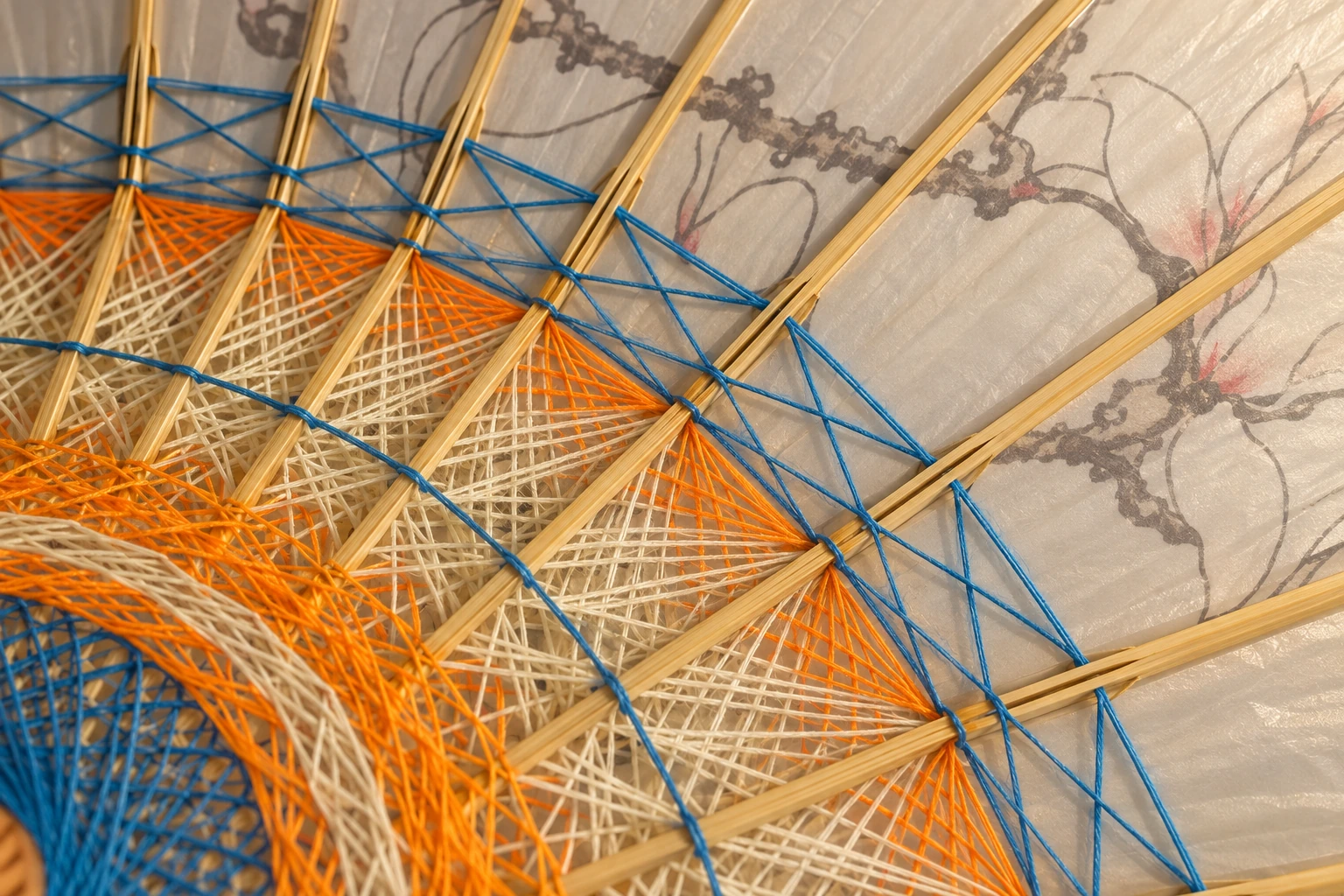
01 · Shape the frame
Bamboo ribs give the canopy its repeating lines. They are shaped and smoothed by hand before assembly. A visit by Xiangtan University documented the mortise-and-tenon joinery within SHENGHE’s bamboo structure. Our current catalogue specifies thicker, hand-smoothed ribs in a bamboo-and-wood frame.
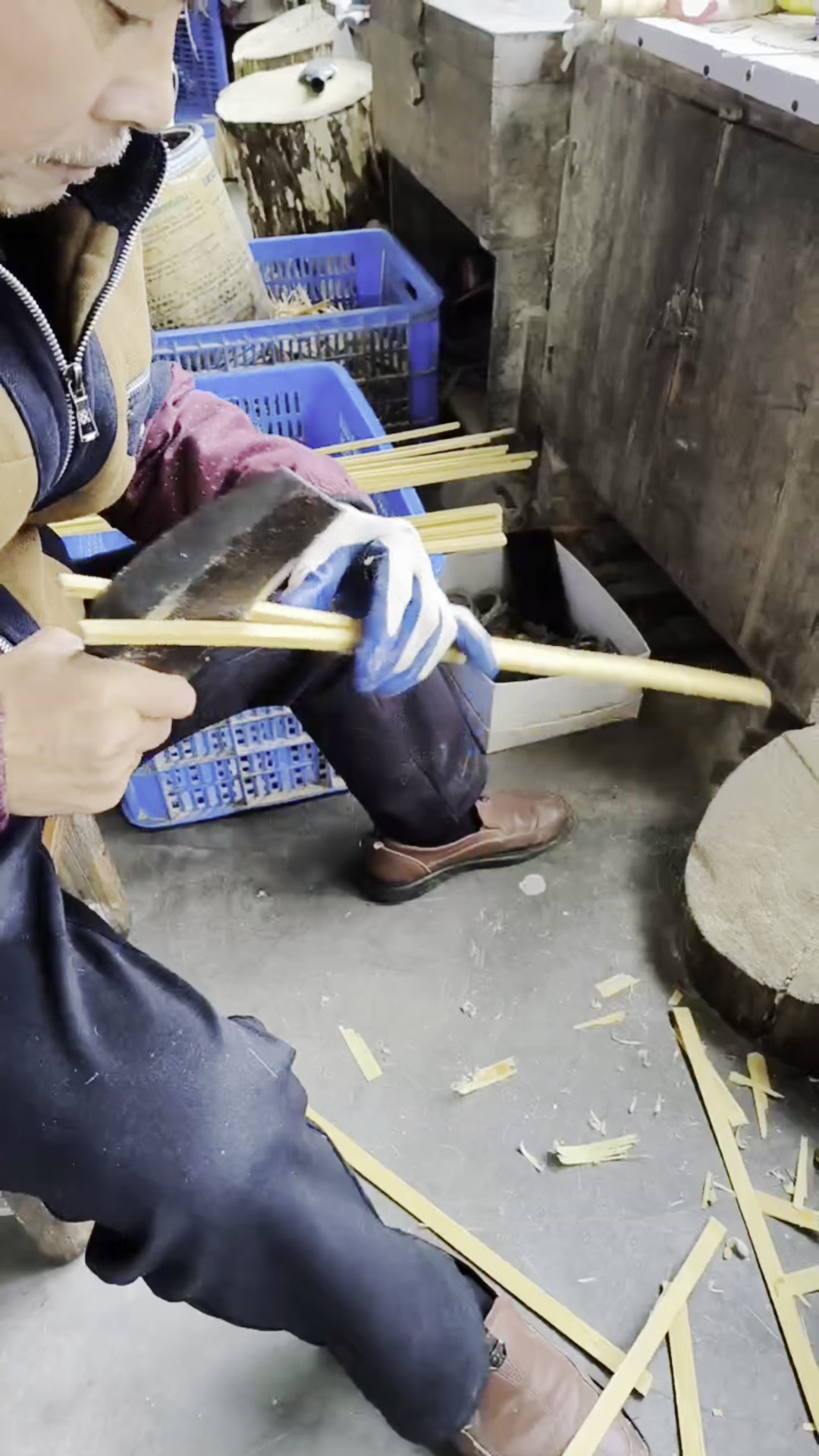
02 · Work the thread
Coloured threads pass through holes in the ribs and are worked between them. A reporter visiting SHENGHE watched red and green threads being woven through the frame. Our partial and full lacing options create different visual densities beneath the canopy, with the pattern and spacing belonging to the selected umbrella.
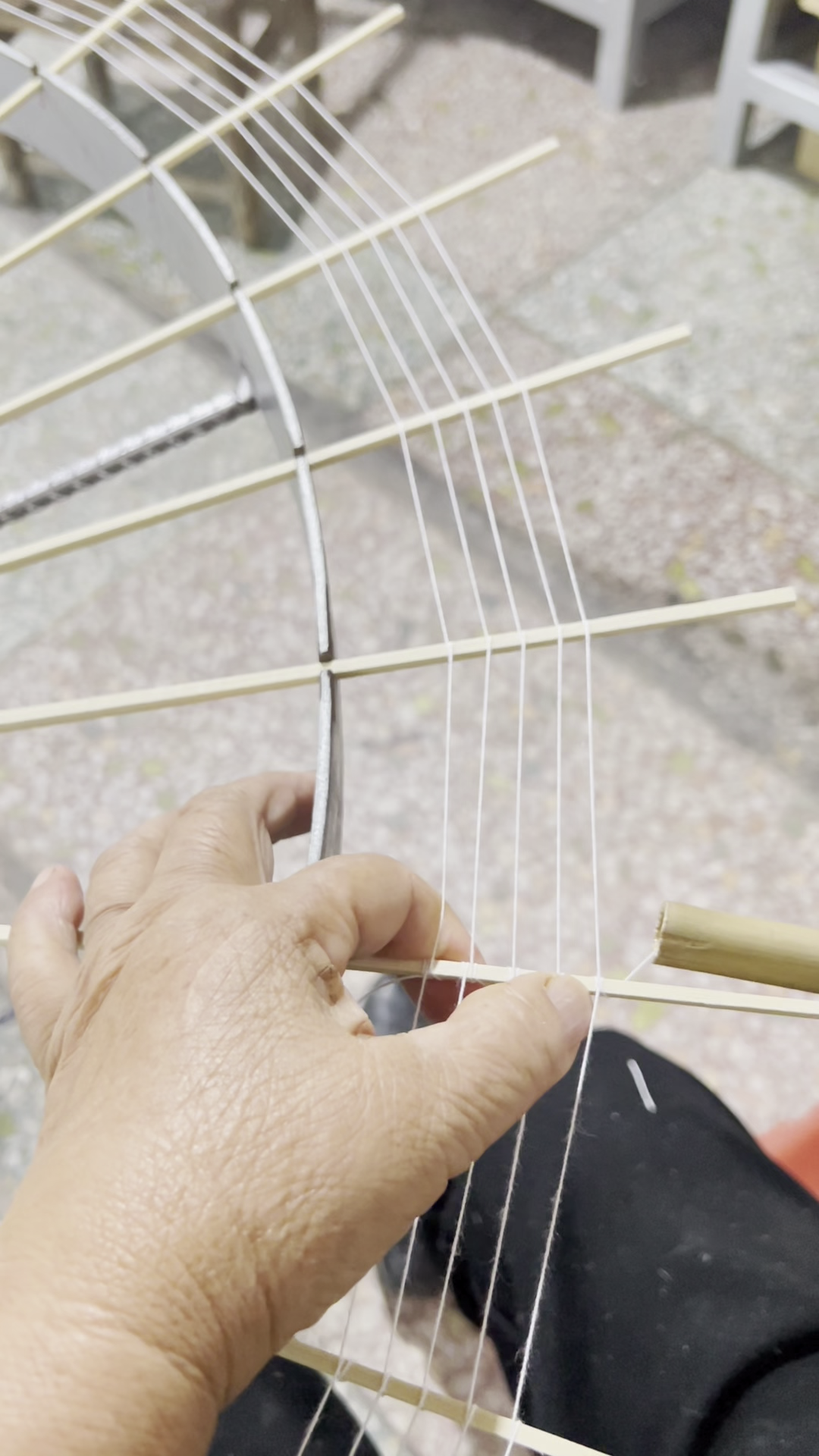
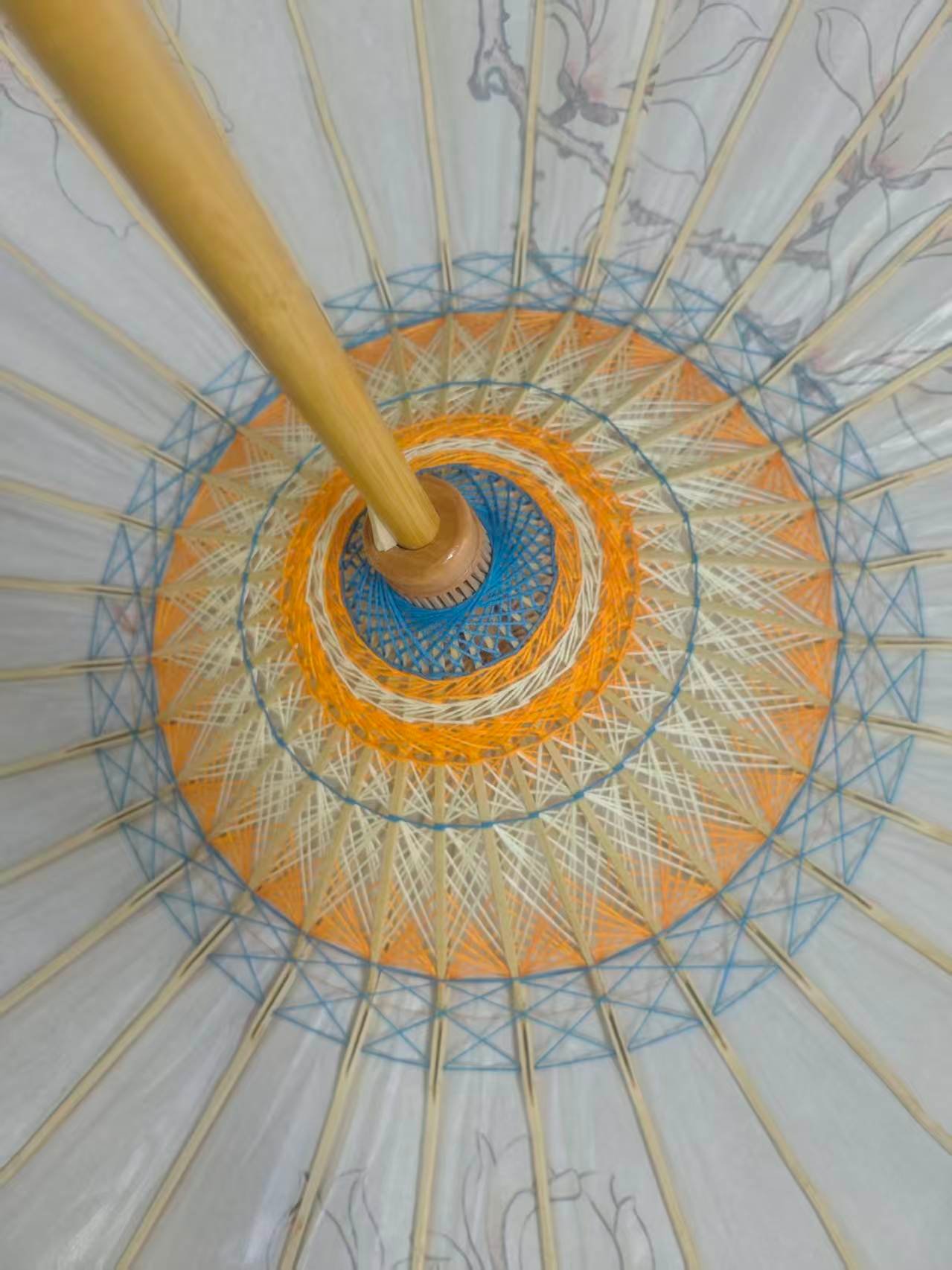
03 · Fit the canopy
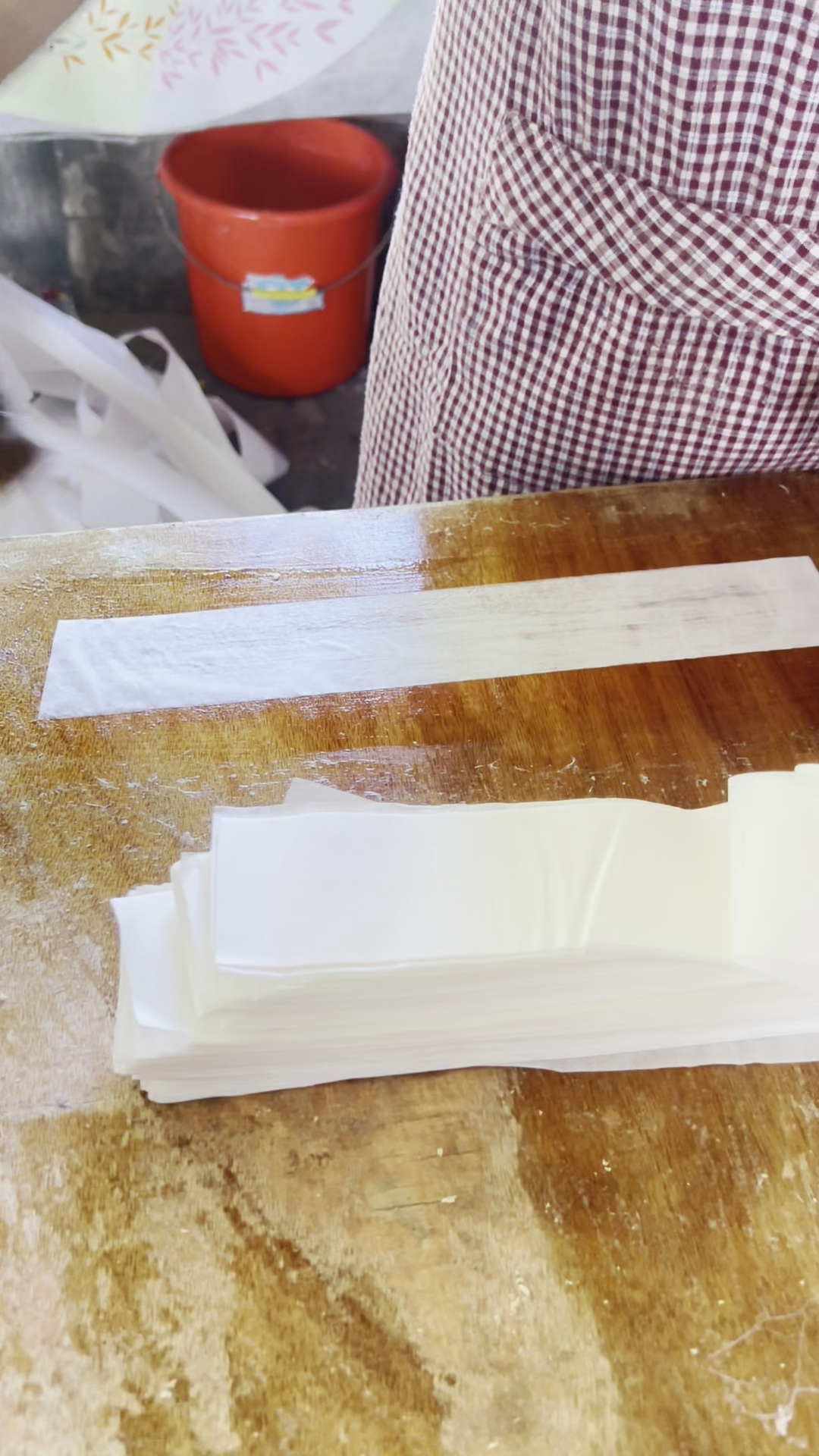
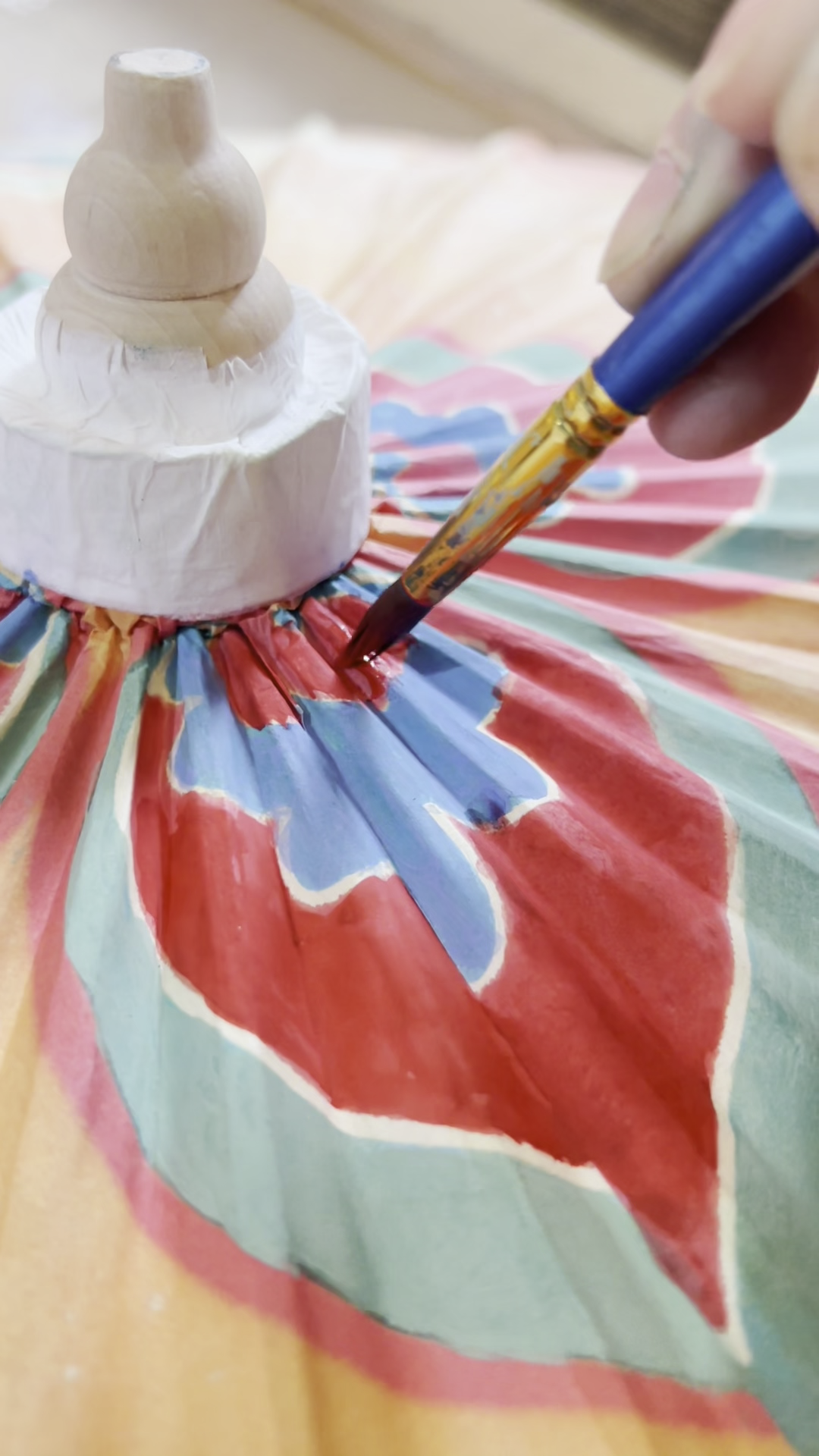
Four fitted pieces of paper are joined over SHENGHE’s bamboo frame to form its rounded canopy. Fine folds follow the movement of the ribs as the umbrella opens and closes. This construction gives the decorated surface its curved shape and the close-set pleats visible around the wooden crown.
04 · Give the surface its character
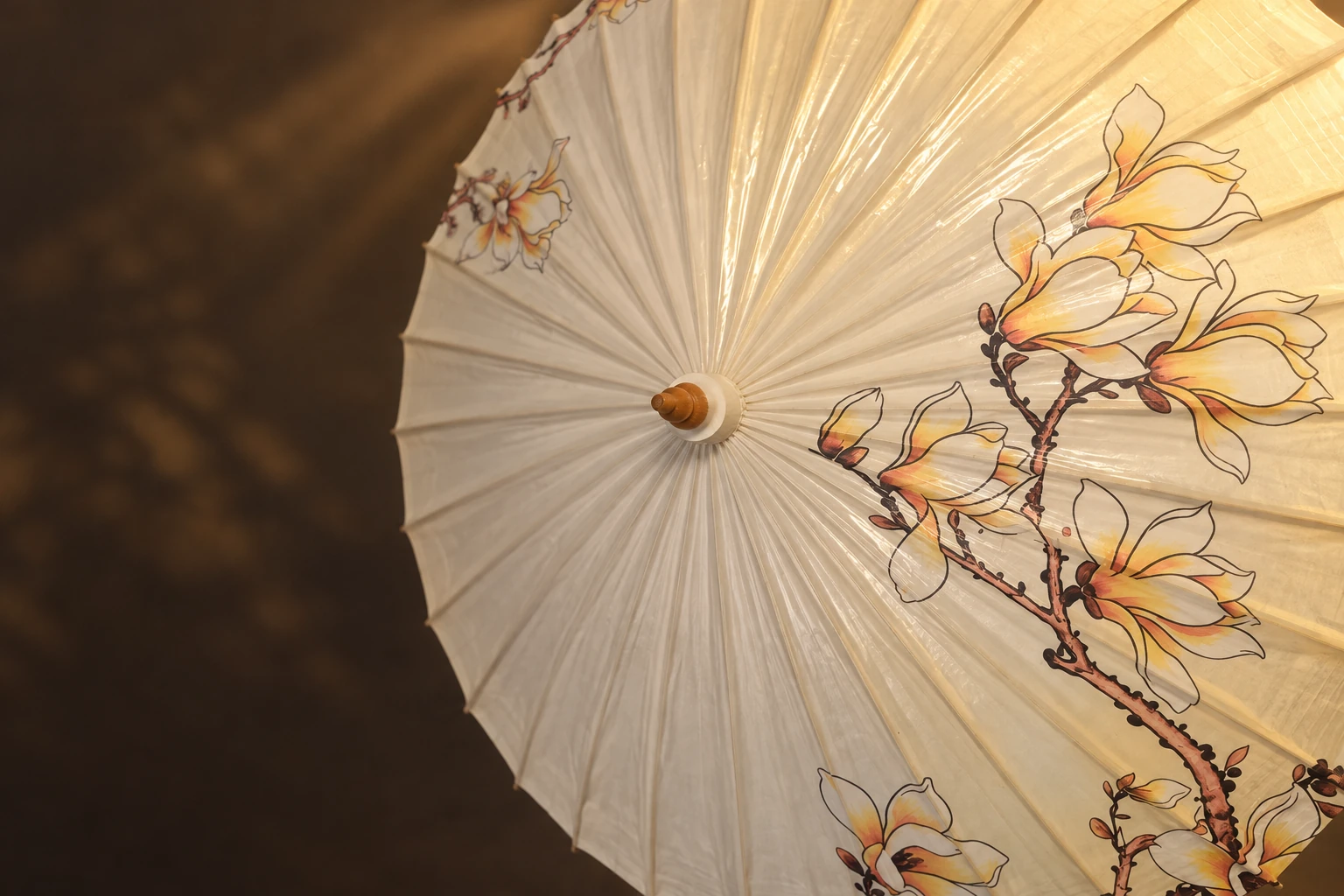
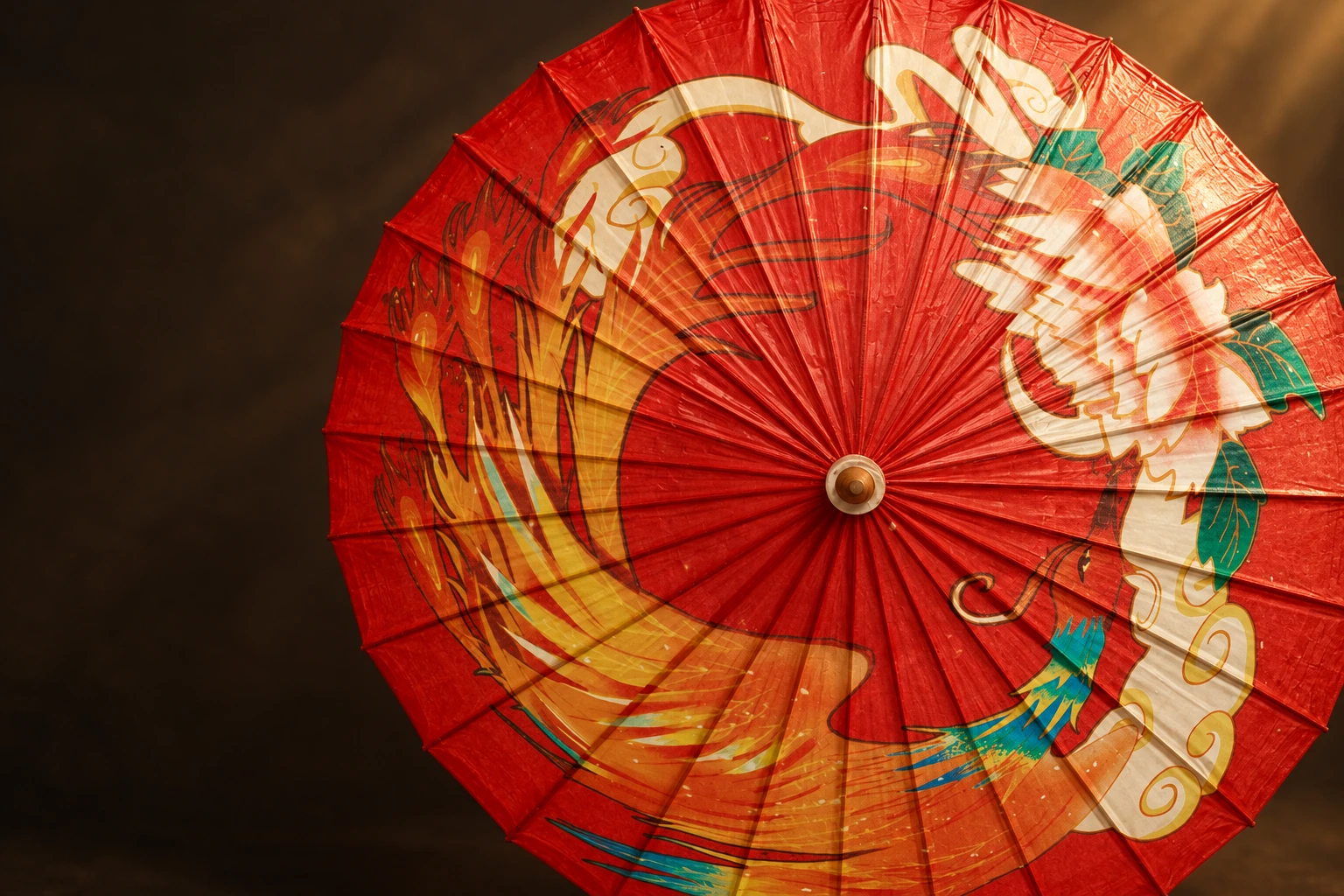
The canopy is a space for SHENGHE’s designs, from flowers and landscapes to contemporary illustration. Designer Liangzi has described bringing new visual styles into his family’s umbrella work. The ribs, joins and folds remain part of the composition as the umbrella opens and turns.
05 · Finish for rain
The umbrellas in our current catalogue receive three coats of tung-oil-free gloss finish by hand. This protective treatment gives the paper a gentle sheen and prepares the umbrella for rain use. After rain, let the canopy dry thoroughly before storing it.
How can paper keep out rain?
The paper canopy works together with its frame and protective coating. The rounded shape sheds rain, while the finish protects the paper surface. For the current SHENGHE catalogue, that finish is a hand-applied, three-coat gloss treatment without tung oil.
Refining the finish in Shigu
Material development is part of SHENGHE’s own workshop story. A March 2026 visit by Hunan Daily described an odourless gloss finish introduced as an alternative to conventional tung oil. Our current catalogue specifies this change through a tung-oil-free finish applied by hand in three coats.
Knowledge shared at the workbench
In July 2026, Xiangtan University chemistry students visited SHENGHE in Shigu to study the relationship between established hand skills and material development. The visit recorded bamboo joinery, a four-sheet paper canopy and discussion of finishes. It offers a close view of this workshop’s approach to keeping the craft in use.
Thoughtful changes, familiar craft.
The current SHENGHE catalogue brings together these construction details:
A curved four-piece canopy
Four fitted sections form the rounded canopy, giving the artwork a gently curved surface.
More substantial ribs
Thicker bamboo ribs are smoothed by hand before becoming part of the folding frame.
A shaped handle
A refined handle profile completes the umbrella at the point where it meets the hand.
A different protective finish
For the current collection, a tung-oil-free gloss finish replaces traditional tung oil, with three coats applied by hand.
Further reading: Hunan Daily workshop visit, March 2026 · Xiangtan University workshop visit, July 2026.